Who it is for
- Chief executives, directors and spokespeople.
- Communications and press teams who brief them.
- Subject experts asked to comment in the media.
- Public representatives, candidates and public sector leaders.
What you will learn
- How journalists think, what they need and how an interview is built.
- How to prepare three messages and make sure they are heard.
- How to answer the question you were asked and then bridge to the point you came to make.
- How to deal with interruptions, hypotheticals, loaded questions and silence.
- How to stay composed on camera: eyes, hands, posture, breathing and voice.
- The differences between live, pre-recorded, radio, print and down-the-line interviews.
- What to do in the ten minutes before the interview and the ten minutes after.
How the session runs
- A briefing on the fundamentals from a working broadcaster.
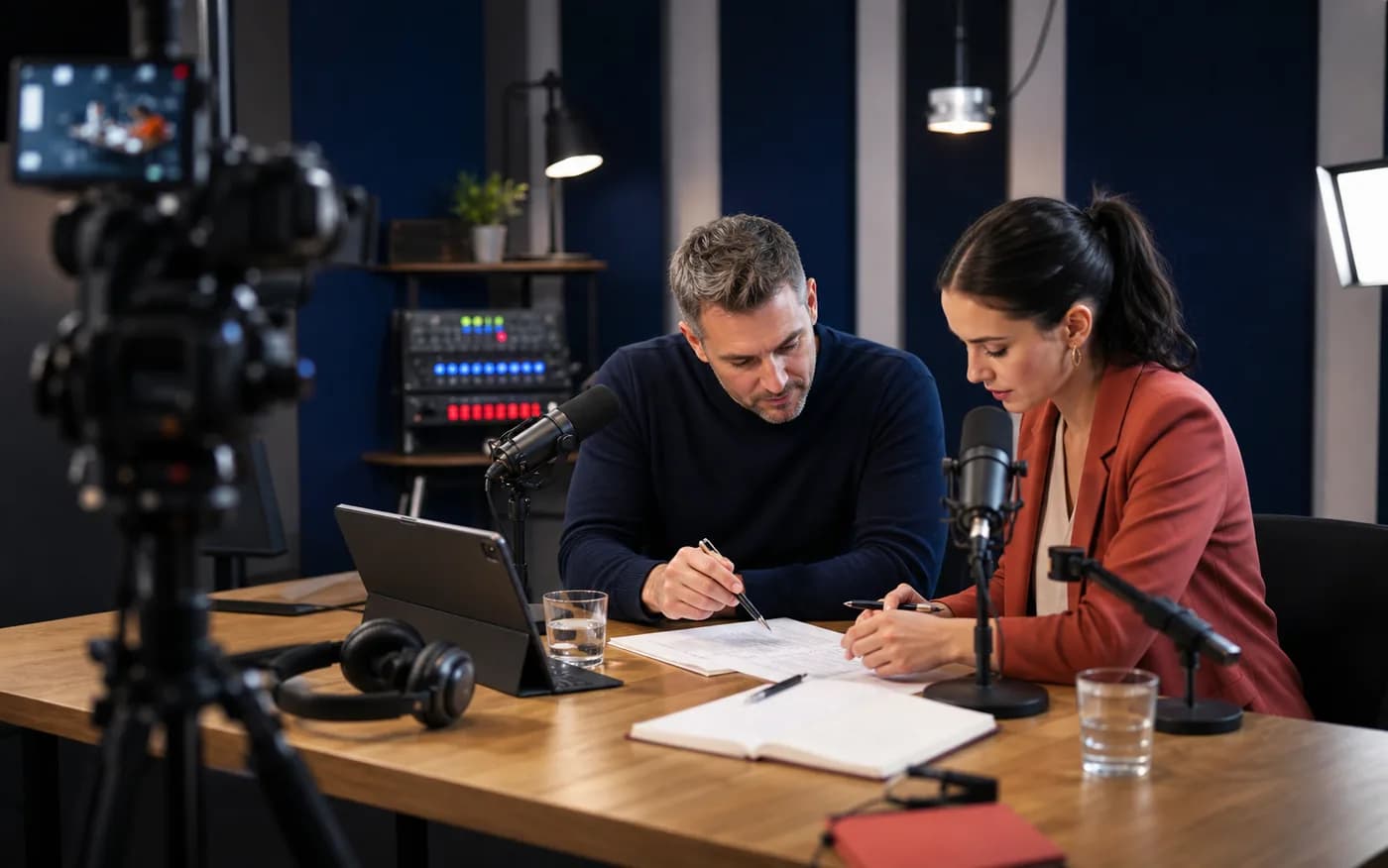
- Simulated interviews on your real issues, recorded in realistic conditions.
- Playback and review, with specific changes to make.
- Repeated interviews with the pressure increased each time.
- A written report for every participant.
Crisis and hostile interview preparation
When the story has turned, the interview is different. We prepare leaders and spokespeople for hostile questioning, breaking news and reputational risk: holding statements, message discipline under attack, the questions you must not answer and how to decline them, and how to keep your composure when the interviewer does not want you to.
Delivered as a standalone half-day, or as an urgent one-to-one session when the call has already come in.
Formats
- Half-day workshop.
- Full-day workshop including print, radio and television formats.
- One-to-one preparation for a specific interview or announcement.
- Two-session programme with a real-world interview between sessions.